REVIEW · PHUKET
Thai Cooking Class by Kata Thai Cooking School in Phuket
Book on Viator →Operated by Oh-Hoo · Bookable on Viator
Phuket’s best souvenir might be dinner you cooked. This Thai Cooking Class in Kata turns classic dishes into skills you can repeat at home, with a small-group setup and clear guidance from Sally and Jim.
I especially like the small-group limit of up to 12, which makes it easier to ask questions while you’re cutting, stirring, and tasting. I also like the organized flow: you start with ingredients and explanations, then actually cook your own food, and finish with a lunch you can point to and say, I made this. One consideration: if you go on the afternoon option, the experience begins with a local market walk, so plan for some outdoor time and bring what you need for sun or light rain.
In This Review
- Quick reasons to pick Kata Thai Cooking School
- Why this Phuket Thai Cooking Class feels worth the money
- Getting to Kata Thai Cooking School and starting with lemongrass tea
- The big choice: morning basics vs afternoon market walk
- Morning course: ingredients first, then cooking
- Afternoon course: start at the fresh local market
- Meet Sally and Jim: clear teaching you can follow while cooking
- What you actually cook: Thai favorites and flavor logic
- Your class timeline: from tea to lunch (and back to Kata)
- Morning schedule
- Afternoon schedule
- Group size, atmosphere, and why the class stays fun
- Pickup, mobile ticket, and other practical details that affect your day
- Price check: what $83.78 buys you (and why it adds up)
- Who should book this class, and who might prefer something else
- Should you book Kata Thai Cooking School in Phuket?
- FAQ
- How long is the Thai Cooking Class in Phuket?
- Is pickup offered for the Kata Thai Cooking Class?
- How many people are in each class?
- What’s different between the morning and afternoon courses?
- What dishes will I learn to make?
- What if the weather is bad?
- What is the child ticket age range?
Quick reasons to pick Kata Thai Cooking School
- Up to 12 people keeps the class personal and manageable
- Sally and Jim’s instruction is built around step-by-step teaching
- Market tour for afternoon classes starts with fresh local ingredients
- Recipe booklet + apron help you recreate dishes later
- You cook and eat 4 dishes as part of the 3–4 hour class
Why this Phuket Thai Cooking Class feels worth the money
At about $83.78 per person for roughly 4 hours, you’re paying for more than a meal. You’re paying for instruction, ingredients used during the class, and the chance to leave with a recipe booklet and the confidence to shop and cook Thai flavors on your own. In practice, this kind of class is often best value when you want to go beyond eating Thai food while traveling and actually understand what makes the dishes work.
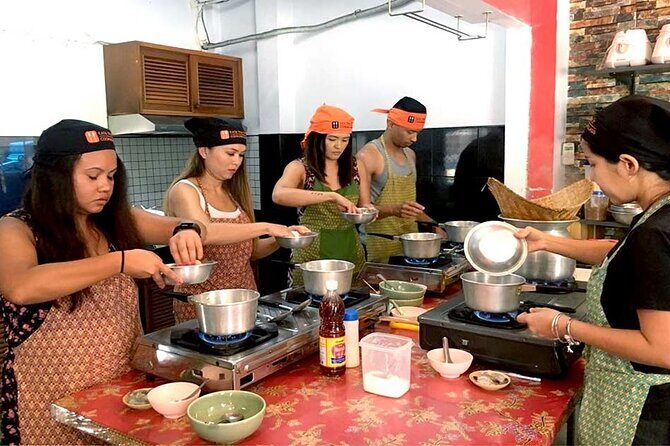
What really makes this class feel like a better deal is the structure. It’s designed around a limited group (maximum 12), so you’re not squeezed into a big demo where you watch and take a few photos. Instead, you’re part of the kitchen action. That hands-on part matters in Thai cooking, because the difference between good and great often comes down to balance: acidity, saltiness, sweetness, heat, and how aromatics are timed.
The other value piece is simplicity. The class is set up so that even if you’ve never cooked Thai food before, you can follow along. Your day starts with a quick welcome, then moves into ingredient choice and cooking methods, and ends with your own lunch at Kata.
You can also read our reviews of more cooking classes in Phuket
Getting to Kata Thai Cooking School and starting with lemongrass tea
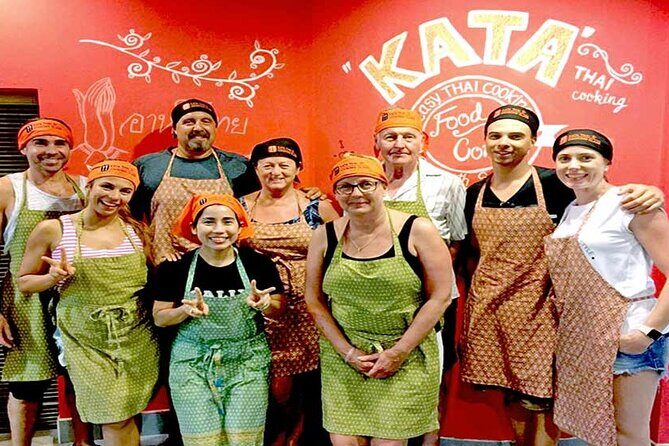
The class meets at Thai Cooking School Phuket (Kata Thai Cooking Class) at 1 Patak Rd, Tambon Karon, Amphoe Mueang Phuket, Chang Wat Phuket 83100. The location is in the Kata area near Karon and Patong on Phuket’s west coast, and pickup is offered, which is a big help if you don’t want to juggle taxis right away.
Timing is straightforward. For the morning session, you arrive at 10:30am, then the class begins around 10:45am. For the afternoon session, arrivals are 3:30pm, with instruction starting around 4:30pm. You’re welcomed before you cook, including a relaxing glass of lemongrass tea and time to meet your group.
That first 15 minutes does more than fill time. It helps you get comfortable with the pace and with your instructors. When you’re about to handle knives, spice mixes, and hot pans, you’ll appreciate starting calm rather than rushed.
The big choice: morning basics vs afternoon market walk
This class gives you two options, and they’re different enough that you should pick based on what you want out of the day.
Morning course: ingredients first, then cooking
The lunch-style flow for the morning is built around basic ingredient choosing, a cooking demonstration, then actual cooking, and finally tasting what you made. If you’re short on time, or you’d rather skip outdoor walking, the morning format is the more straightforward route.
You still get the same core idea: step-by-step guidance and practical teaching on how Thai dishes come together. The focus is more on technique and execution than on learning the marketplace.
Afternoon course: start at the fresh local market
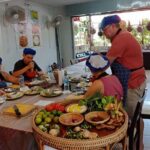
The afternoon option starts with walking through the Fresh Local Market. You taste fresh fruits or food along the way, then head into preparation and cooking. If you like connecting meals to ingredients, this is the more satisfying option. It’s also a helpful mindset shift: you begin thinking like a Thai home cook—fresh produce, knowing what to look for, and tasting before you cook.
The only catch is weather and comfort. The experience requires good weather, and market time means you’ll likely be outside for part of the start. Light rain or sun can change how pleasant that first segment feels.
You can also read our reviews of more tours and experiences in Phuket

Meet Sally and Jim: clear teaching you can follow while cooking
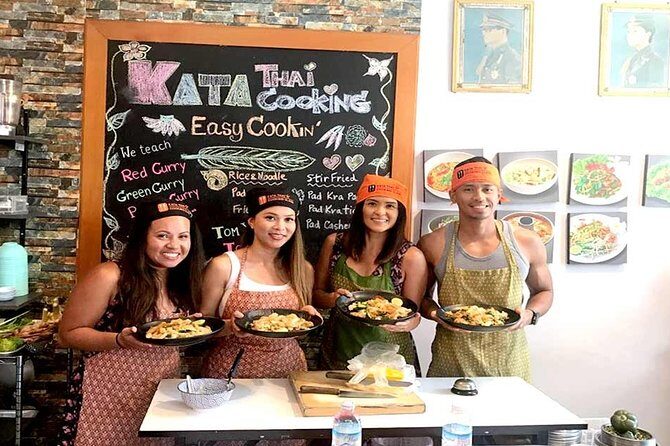
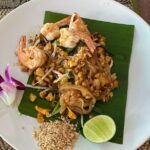
Sally and Jim are the heart of this class. You’re not just handed a set of instructions and told to figure it out. You get guided explanations step by step, plus a pace that supports questions while you’re actively cooking.
You’ll receive a booklet with the recipes for the day and an apron. Those two items matter more than they sound. The booklet gives you a written reference after the class, which is key when you’re trying to remember what you did with sauce ratios, spice levels, or timing. The apron helps you stay in the work, not constantly adjusting clothes or worrying about small spills.
The teaching style is also built for confidence. When instructors break down each dish into manageable steps, you’re more likely to understand why the flavors work—not just copy a recipe. That’s what turns Thai cooking from a fun one-time meal into a skill you can repeat.
What you actually cook: Thai favorites and flavor logic
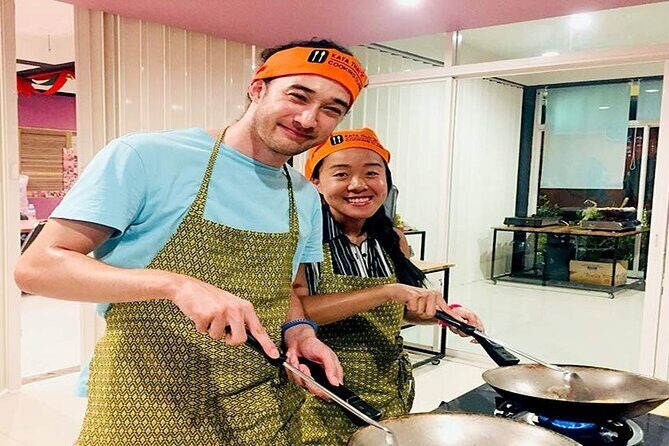
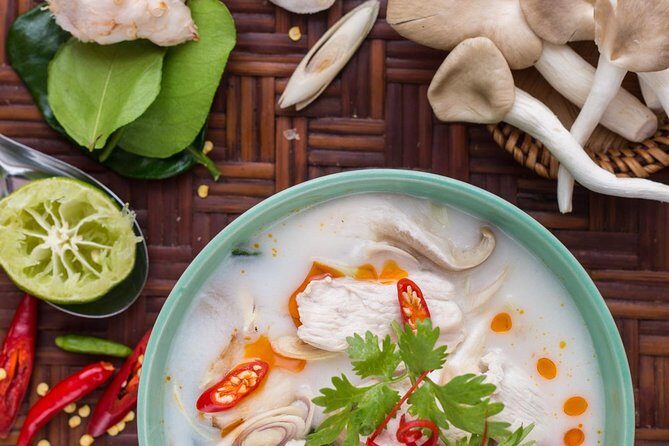
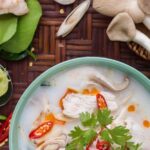
The menu isn’t listed here item-by-item, but you’ll work with classic Thai dishes and flavors. The class highlights dishes like tom yum soup and mango sticky rice, plus Thai green curry (listed as green cutty in the details). Even if the exact lineup shifts, you should expect the day’s cooking to center on the big Thai crowd-pleasers.
Here’s what’s useful to know about the cooking you’re doing:
- You cook from scratch, not just assemble. That’s important because Thai cooking often depends on how aromatics are handled and when liquids are added.
- You’ll learn about the significance of Thai cuisine in its culture. That can sound abstract, but in a cooking context it usually means understanding where flavors come from and how everyday Thai meals are built.
- You’ll taste your own food at the end, which helps you calibrate your palate. If something needs more tang, sweetness, salt, or heat, tasting is how you learn quickly.
A practical point: Thai dishes often feel “bold” because they combine several flavor types at once. The class is helpful because it teaches you to build those combinations step by step rather than treating each dish as a mystery.
Your class timeline: from tea to lunch (and back to Kata)
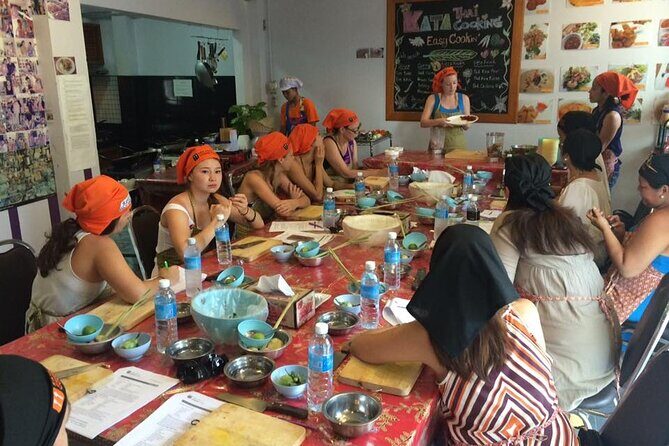
The class runs about 3–4 hours, and the schedule is designed so you’re not stuck waiting around.
Morning schedule
- 10:30am: arrival at Kata beach area, meet and relax with lemongrass tea
- 10:45am: you start learning with Sally and Jim, including demonstrations
- 1:00pm: your lunch is served and you eat what you cooked
- 1:30pm: return to hotel
Afternoon schedule
- 3:30pm: arrival and meet the group
- 4:30pm: cooking instruction begins after the welcome and intro
- 7:00pm: dinner-style course, you eat the Thai lunch cooked by you
- 7:30pm: return to hotel
That late return time for the afternoon class is worth planning around, especially if you have a beach dinner reservation. Still, it can be a nice way to build your evening: you get a planned meal before any nightlife plans.
Group size, atmosphere, and why the class stays fun
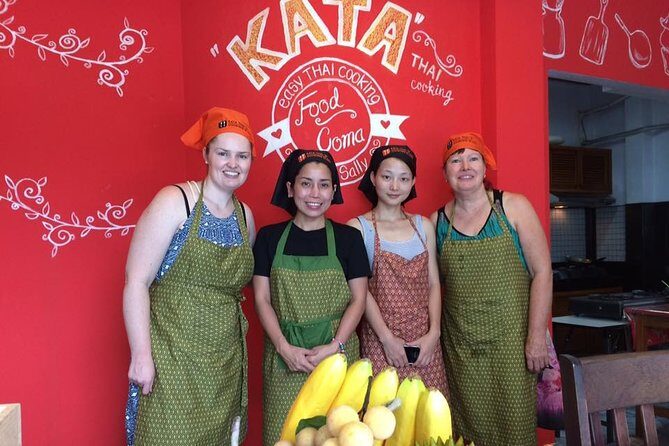
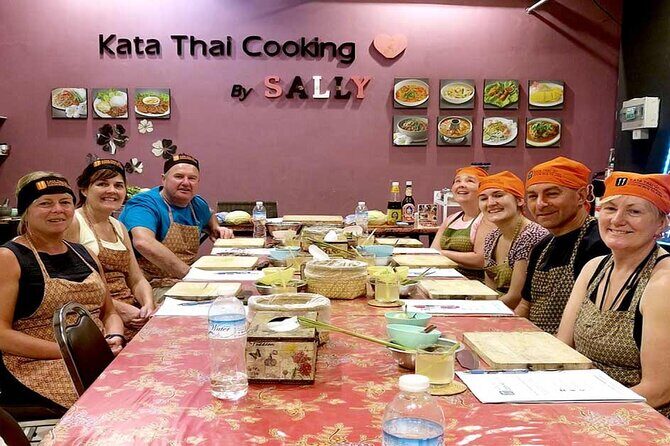
Thai cooking classes can go two ways: either you feel like you’re in a strict classroom, or you feel like you’re hanging out with someone who cooks a lot. This one aims for the friendly middle. It’s described as having a friendly atmosphere to create good relationships, and the instructors are also entertainers.
That matters for most people. When the atmosphere is relaxed, you stay focused on cooking, not stress. It also makes it easier to cook confidently if you’re traveling solo or coming with someone who doesn’t know much about Thai food.
And because the maximum group size is 12, you’re less likely to get lost. You can get help when you need it, and you’re not stuck waiting for long stretches while someone else’s dish is fixed.
Pickup, mobile ticket, and other practical details that affect your day
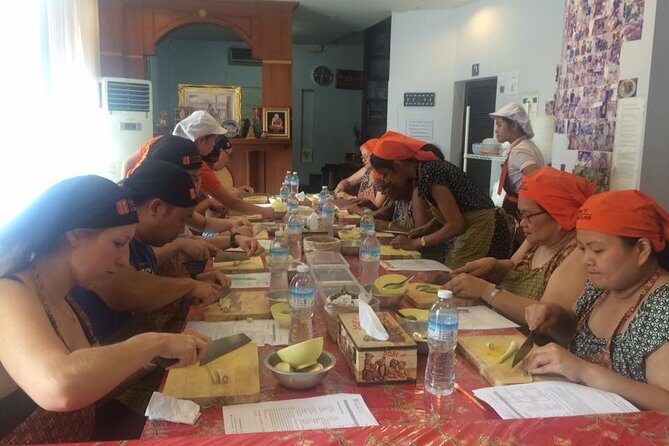
This experience offers pickup, which is one of the most practical perks on Phuket. When you’re spending a few hours cooking, you don’t want to lose time figuring out transport at the start and end.
You’ll also get a mobile ticket, and confirmation happens at the time of booking. The class is near public transportation too, which helps if you decide to skip pickup for any reason.
One more operational detail: there’s a minimum of 2 people required for the tour to run, and it caps at 12 travelers. So if you’re booking late or traveling in low season, build in flexibility.
Finally, the experience requires good weather. If it can’t run due to poor weather, you’ll be offered a different date or a full refund. That’s particularly relevant if you choose the afternoon option with a market start.
Price check: what $83.78 buys you (and why it adds up)
Let’s talk value, because cooking classes can range wildly.
For about $83.78 per person, you’re getting:
- instruction and step-by-step teaching by Sally and Jim
- a small-group setting (up to 12)
- ingredient handling and cooking time
- a recipe booklet and an apron
- lunch (or dinner-style meal) cooked by you
- pickup offered
This is one reason the cost can feel fair. If you were to buy ingredients and take cooking lessons elsewhere, you’d pay for expertise and time. Here, you’re bundling learning with a full meal, plus ingredients are part of the experience rather than something you have to manage yourself.
Also, the price makes more sense if you’re actually going to use the recipes afterward. The class is designed for that: the booklet plus tasting helps you remember what to do next time.
Who should book this class, and who might prefer something else
I think this is a great fit if:
- you like Thai food and want more than a restaurant meal
- you want a hands-on cooking experience with real guidance
- you enjoy small groups and personal attention
- you’d like to learn what ingredients and timing actually do
It may be less ideal if:
- you hate outdoor walking, since the afternoon format begins with a fresh local market walk
- you want a super short experience, since the class runs about 3–4 hours
- you’re very sensitive to schedule changes, because the activity requires good weather
It’s also family-friendly in a basic sense, since child tickets exist for ages 4–8. Still, younger kids may need patience for cooking time and attention in the kitchen setup.
Should you book Kata Thai Cooking School in Phuket?
I’d book it if your goal is practical Thai cooking, not just eating. The combination of small-group size, step-by-step teaching by Sally and Jim, and the fact that you cook and eat your own dishes makes it feel like a real learning experience. Add the recipe booklet and apron, and you’re leaving with something you can actually use later.
I’d think twice only if the afternoon market start sounds like a dealbreaker for you, or if your travel plans are so tight that a weather-related reschedule would be painful.
If you want one food-focused activity that teaches you how to recreate Phuket Thai dishes at home, this is a strong choice.
FAQ
How long is the Thai Cooking Class in Phuket?
The class takes about 3–4 hours (listed as 4 hours approx.).
Is pickup offered for the Kata Thai Cooking Class?
Yes. Pickup is offered, and the experience ends back at the meeting point.
How many people are in each class?
The group size is limited to a maximum of 12 people (with a minimum of 2 required to run the tour).
What’s different between the morning and afternoon courses?
The morning course focuses on ingredient choosing, a cooking demonstration, then you cook and taste your own lunch. The afternoon course starts with a walk through the fresh local market and tasting fresh fruits or food, then moves into cooking and eating.
What dishes will I learn to make?
The class highlights classic Thai dishes such as tom yum soup, mango sticky rice, and Thai green curry, along with other dishes chosen for the day.
What if the weather is bad?
The experience requires good weather. If it’s canceled due to poor weather, you’ll be offered a different date or a full refund.
What is the child ticket age range?
Child tickets apply for ages 4–8 years.