REVIEW · PHUKET
Phuket Guided Tour to Elephant Sanctuary with Hotel Transfers
Book on Viator →Operated by MY Holiday Centre · Bookable on Viator
Elephants, close up, and no riding. This Phuket ethical elephant sanctuary visit is built around real time in a forest setting, with rescued elephants roaming freely and you learning how caretakers support welfare. It’s short, friendly, and designed so you actually do something besides watch.
I love that it’s hands-on—you can prepare snacks and feed elephants by hand in a respectful way. I also like the small-group setup (up to 15 people), which keeps the pace calm and makes it easier to ask questions.
One thing to consider: the experience is only about 1 hour, so the educational side may feel like an overview rather than a deep, step-by-step lesson for everyone.
In This Review
- Key things to know before you go
- Why an ethical elephant sanctuary beats Phuket elephant shows
- Getting there from Phuket hotels: pickup, timing, and group size
- Patong Hill Tribe Elephant Village: what happens during your visit
- A quick note on the “walk with them” part
- Hand-feeding by hand: how to make it feel meaningful (and safe)
- Snack prep: why it matters more than it sounds
- Learning about elephant behavior and conservation without getting bored
- Guides like Mr Yu and Dang
- Photos, light refreshments, and that calm post-encounter feeling
- What to wear for Phuket elephant grounds
- The ethical details: what “no riding” really means for your experience
- Price and value: is $42.12 worth it?
- Who this tour is best for (and who should choose something else)
- A few practical expectations before you book
- Should you book the Phuket guided elephant sanctuary tour with transfers?
- FAQ
- How long is the Phuket elephant sanctuary tour?
- Does the tour include hotel transfers in Phuket?
- Can you ride the elephants on this tour?
- Is admission included in the price?
- How big is the group for this experience?
- Do I receive a mobile ticket?
- What is the cancellation policy?
Key things to know before you go
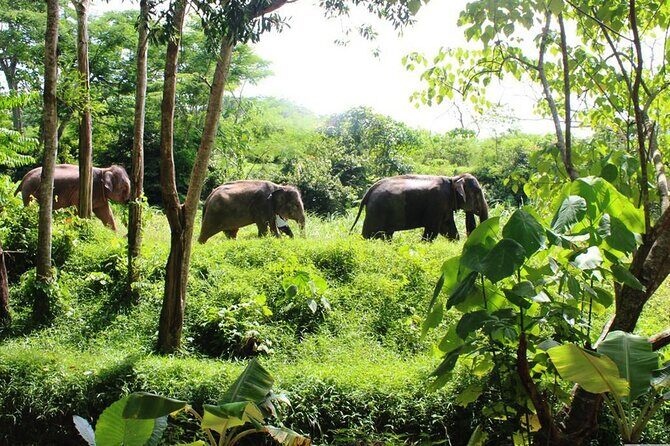
- No riding, no shows: You’ll focus on walking, observing, and feeding instead of performances.
- Hotel transfers included: Pickup makes it easy, especially if Patong is your base.
- Hand-feeding with guidance: You’ll learn what to offer and how to do it safely.
- Snack prep + supplement talk: Care routines and herbal supplements are part of the visit.
- Small group cap (15 max): Better control of spacing around the elephants.
- Rescued-elephant conservation focus: Expect education on behavior and challenges in plain language.
Why an ethical elephant sanctuary beats Phuket elephant shows
If you’re choosing between a quick attraction and a more responsible encounter, this type of tour makes the decision easier. The promise here is clear: no riding, no tricks, no shows—just rescued elephants in a natural forest home. That matters because it changes what you’re looking at. You’re not watching a routine; you’re watching animals act like animals.
You also get to connect in a way that feels more human than theatrical. Walking along natural trails, preparing snacks, and feeding by hand are all active parts of the experience. Done right, it turns a famous animal into something personal, but still respectful.
You can also read our reviews of more guided tours in Phuket


Getting there from Phuket hotels: pickup, timing, and group size
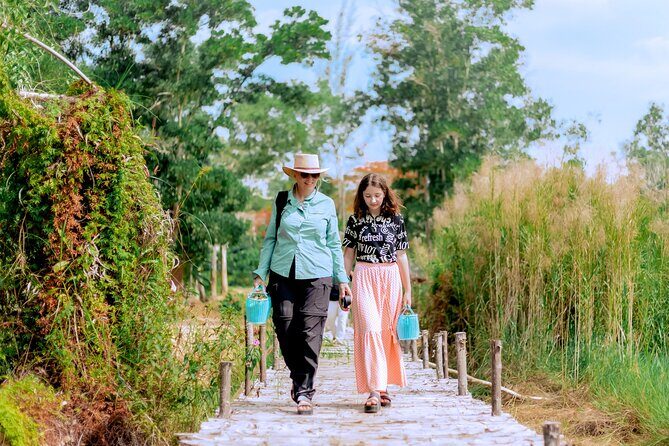
The big practical win is the hotel transfer. You’re picked up and brought to the sanctuary, then returned afterward. If you’re staying around Patong or anywhere else in Phuket and you don’t want to wrestle with transport, this is a comfort move.
Time-wise, plan on about 1 hour on site (approx.). That’s perfect for fitting into a busy day, but it also explains the pacing. You’ll have time to walk, feed, and learn basics, yet it won’t turn into an all-day deep immersion.
One more practical detail: the max group size is 15. In elephant encounters, crowd control is more than a nice-to-have. Smaller numbers usually mean better spacing, less shouting, and less chaos around the handlers and the animals.
Patong Hill Tribe Elephant Village: what happens during your visit
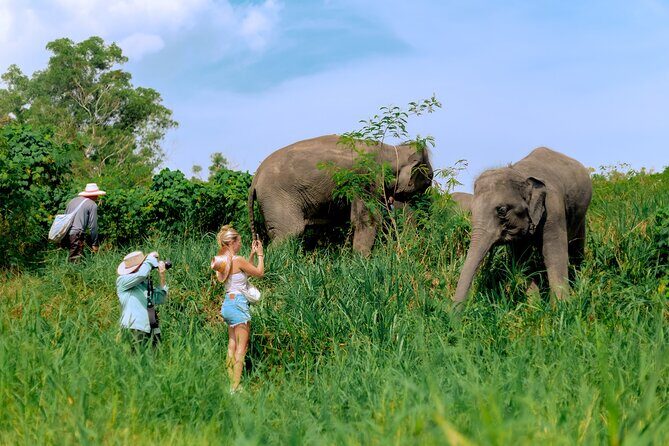
Your trip centers on Patong Hill Tribe Elephant Village, where a local guide introduces you to rescued elephants and their backstories. From there, the visit moves outdoors along natural trails, with time to watch elephants forage, roam, and interact in their space.
Expect a caretaking-focused flow. The guide explains how snacks and healthy food are prepared, including mention of herbal supplements. You’ll also get the chance to feed the elephants in a safe, respectful way—meaning you’re not just standing there snapping photos.
The final portion is designed to let you settle back in. You get time to relax, take photos, and enjoy light refreshments before the return trip. For a one-hour format, it’s a well-rounded wrap-up instead of a hard stop.
A quick note on the “walk with them” part
The tour is described as a walk with the elephants, but it’s still controlled. That’s why the guide matters. You should follow their cues closely about where to stand, when to move, and how to interact safely. If you’ve ever seen how quickly a crowd loses its manners, you’ll understand why operators keep it structured.
Hand-feeding by hand: how to make it feel meaningful (and safe)
The most memorable part for many people is the hand-feeding. It’s not just a fun photo moment. When you feed an elephant, you notice details you’d never catch from a distance: how they approach, how they use their trunk, and how calm the interaction can be when everyone stays patient.
Before you feed, you’ll be guided through the rules of respectful interaction. That includes staying in the right area, using the method the staff shows you, and not rushing. Feeding by hand can be thrilling, but the whole point is to do it in a way that keeps the elephants comfortable and the humans safe.
Some visitors also mention interacting with multiple elephants during their visit, with reports around five elephants in at least one experience. Even if your group sees a different number, the feeling tends to be the same: close enough to learn the vibe, not so close that it becomes risky or chaotic.






Snack prep: why it matters more than it sounds
Snack prep isn’t filler. Helping prepare food (and learning what’s added and why) gives you context before you feed. When the guide explains the reasoning—health, supplements, and feeding routines—you’re less likely to treat it like a circus moment.
Learning about elephant behavior and conservation without getting bored
You’ll hear explanations about elephant behavior and conservation challenges, tied directly to what caretakers do day to day. The guiding style seems to focus on practical understanding: how elephants act, what they need, and why the sanctuary model helps.
One honest consideration: because the experience is short, it may feel like a broad overview rather than a long, behavior-by-behavior lecture. Still, for most people, it’s the perfect size. You get a real sense of how staff think, and you leave with questions you can follow up on later.
Guides like Mr Yu and Dang
Some groups have called out guides such as Mr Yu and Dang for being informative. If you happen to be with a guide like that, you can expect a smoother explanation, and likely more attention to what you’re seeing in the moment.
Photos, light refreshments, and that calm post-encounter feeling
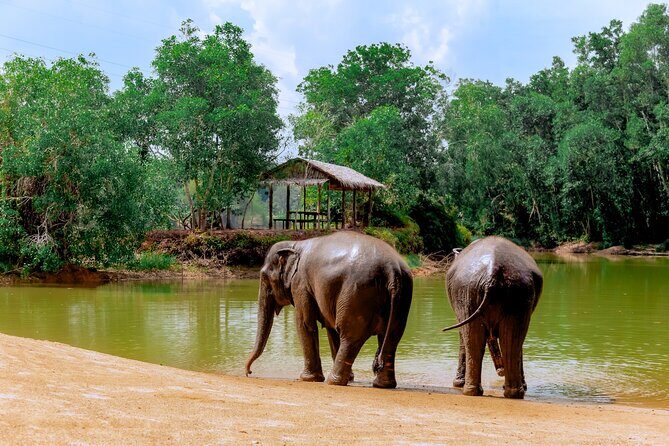
This tour doesn’t just end with a goodbye. You’ll have a photo window and time to relax before you head back to your hotel. In an animal encounter, that pause matters. It helps you absorb what you saw, instead of leaving mid-moment while your brain is still buzzing.
You’ll also get light refreshments, which is a small thing but appreciated after time outdoors and walking on natural paths. Even if you’re not a snack person, it keeps the day from feeling like a fast sprint.
What to wear for Phuket elephant grounds
Since you’ll be on natural trails and outdoors, you’ll be happier with closed-toe shoes that have grip. If you’re worried about sun or rain, bring a light layer and something that helps you stay comfortable. You’ll also want to keep your phone and camera secure, especially when you’re close to the elephants and moving as a group.
The ethical details: what “no riding” really means for your experience
The ethical stance here is more than marketing. “No riding, no shows” shapes the entire atmosphere. You’re not waiting for an animal to perform; you’re observing an animal living in a protected environment.
You can also expect the staff to talk about welfare—how rescued elephants are supported and how the sanctuary gives them a chance to roam and relax. Several people highlight the feeling of elephants being free rather than worked. It’s exactly the kind of contrast you hope for when you do elephant encounters in Thailand.
Is it still an activity? Yes. You’re feeding, walking, and interacting under guidance. But it’s an activity built around respect and calm behavior, not entertainment.
Price and value: is $42.12 worth it?
At $42.12 per person, this is priced like a short, guided experience with real animal time and included basics. What makes it feel more like value than a tourist bargain is that the price includes admission and hotel pickup/transfer.
Many “cheap” tours end up costing you time (and sometimes money) in getting to the site. Here, the transfer is part of the package. And because the group is capped at 15, you’re less likely to get stuck in a big crowd that turns a hands-on experience into a rushed line.
One more factor: you’re not paying for a half-day itinerary. You’re paying for a focused hour doing the parts that matter—walking, learning, snack prep, and hand-feeding.
Who this tour is best for (and who should choose something else)
This tour is a strong fit if you want an ethical Phuket elephant sanctuary experience but don’t have a half-day or full-day buffer. It works well for couples, families with adult children, and anyone staying in Phuket who wants something easy to plan.
It’s also a good match if you’re an animal lover who cares about the difference between interaction and spectacle. If you prefer structured guidance and a calm pace with smaller numbers, the 15-person cap helps.
If you’re looking for an all-day schedule with deep scientific training, this one may feel short. Even with great guides, one hour can only cover so much. You’ll still come away with a meaningful experience, but it won’t replace a long, multi-stop education day.
A few practical expectations before you book
The operator notes that service can be refused for passengers who appear intoxicated. That’s a good safety rule, and it also signals that the experience is meant to stay calm around both elephants and staff.
The tour is described as near public transportation, so it may be workable even if you don’t rely on pickup. Still, the point of this package is the included transfers, so you’ll probably want to use that benefit.
Finally, most people can participate, but you should think about your comfort level with outdoor walking on natural paths and spending time in close proximity to large animals.
Should you book the Phuket guided elephant sanctuary tour with transfers?
If you want a Phuket elephant experience that feels ethical and personal, I’d say yes—with a couple of smart caveats. Book it if you care about no riding, no shows, and you want to do real hands-on feeding under guidance. Book it if you like the idea of hotel pickup and a small-group visit that respects the animals’ space.
Don’t book it expecting a half-day or multi-hour masterclass. This is a focused 1-hour experience. You’ll get a strong taste of elephant care and sanctuary life, but it’s built to be short and sweet rather than encyclopedic.
If your dream day includes calm observation, guided hand-feeding, and a conservation message you can actually remember, this one makes a lot of sense.
FAQ
How long is the Phuket elephant sanctuary tour?
The tour is about 1 hour (approx.).
Does the tour include hotel transfers in Phuket?
Yes. Pickup is offered, and hotel transfers are included.
Can you ride the elephants on this tour?
No. The experience is described as having no riding and no shows.
Is admission included in the price?
Yes. An admission ticket is included.
How big is the group for this experience?
The maximum group size is 15 travelers.
Do I receive a mobile ticket?
Yes. A mobile ticket is included.
What is the cancellation policy?
You can cancel for free up to 24 hours in advance for a full refund. If you cancel less than 24 hours before the start time, the amount paid is not refunded.