REVIEW · PHUKET
Old Phuket Farm Ticket – Countryside Local Life Culture
Book on Viator →Operated by Oh-Hoo · Bookable on Viator
One thing I love about Phuket is that it has more than beaches. This 2-hour Old Phuket Farm experience gives you a real slice of countryside life on Phuket Island, with hands-on stops you can actually picture back in your home kitchen. You’ll spend time with buffaloes, see how rubber tapping works on trees, learn what rice fields look like during planting and harvesting, and even try tin panning.
The best parts are the practical, do-it-yourself style and the way the tour keeps moving through different parts of farm life instead of lingering on just one theme. The tour also includes food moments like tasting pineapples and watching traditional rice milling and winnowing, plus a Thai house segment with coconut grating and curry paste-making. One consideration: the buffalo area may include animals with nose piercing, so it’s worth deciding ahead of time how you feel about that.
In This Review
- Key highlights you’ll feel in your day
- Old Phuket Farm: a small, hands-on slice of Phuket life
- Buffaloes, rubber trees, and tin panning in one 2-hour flow
- Buffaloes: why they’re a big deal in Thai agriculture
- Rubber tapping: tree-to-sheet, not just rubber in a factory
- Rice fields: planting and harvesting rhythms up close
- Tin panning: a hands-on nod to Phuket’s mining past
- Pineapples, rice milling, and winnowing: farm work you can taste
- Pineapple tasting: quick, local, and real
- Traditional rice milling and winnowing
- Thai house visit: coconut grating and curry paste-making
- The guide experience: why people keep giving high marks
- Price and value: is $38.88 fair for 2 hours?
- Who this tour suits best (and who should rethink it)
- Timing and weather: plan around Phuket conditions
- Should you book Old Phuket Farm? My honest take
- FAQ
- How long is the Old Phuket Farm tour?
- What’s included in the Old Phuket Farm ticket?
- What’s the group size for this experience?
- Does the tour require good weather?
- Is there a child ticket, and what ages qualify?
- What’s the cancellation policy?
Key highlights you’ll feel in your day
- Buffalo time: learn why they matter in Thai farming and how they fit into day-to-day work
- Rubber tapping: see the process from tree to sheet, not just a photo op
- Rice planting and harvesting: get close to the rhythms of rice field work
- Tin panning: try the kind of activity tied to Phuket’s mining legacy
- Pineapple tasting and milling: taste the island’s produce and watch traditional rice winnowing
- Thai house kitchen skills: coconut grating and curry paste-making you can follow
Old Phuket Farm: a small, hands-on slice of Phuket life
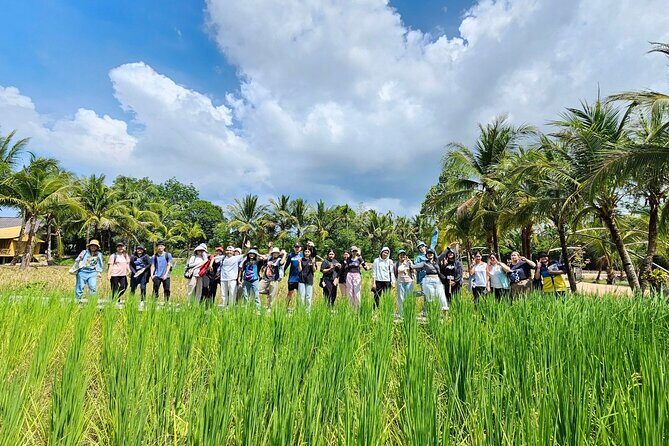
Old Phuket Farm is the kind of activity that works when you want something local but don’t want a full day on the road. The format is straightforward: you stay in one farm setting and rotate through different working areas that show how food and farm products move from nature to daily life. With a maximum group size of 10, you typically get more time at the spots where you’re meant to participate, instead of being stuck at the back of a crowd.
The “countryside local life culture” label isn’t just marketing language. The whole point is that you’re not only watching; you’re learning through simple participation: meeting farm animals, trying farm-style tasks, and seeing processes explained in plain terms. For couples, it feels like a shared activity with real stories. For families, it’s hands-on enough to keep kids from zoning out. For solo travelers, it’s also social in the easy way, since everyone is doing the same set of stops together.
If you’re the type who likes to understand how a place lives, not just how it looks, this is a strong match. You’ll leave with more than memories: you’ll have a mental map of how several Thai farm products are made and used.
You can also read our reviews of more tours and experiences in Phuket



Buffaloes, rubber trees, and tin panning in one 2-hour flow
This tour is built like a chain of short, understandable lessons. You move from animal work to tree work to field work to mining-style fun. It’s not a long lecture. The pace is tight, which matters because this experience is about doing and seeing several processes while everything is fresh in your mind.
Buffaloes: why they’re a big deal in Thai agriculture
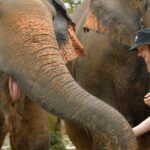
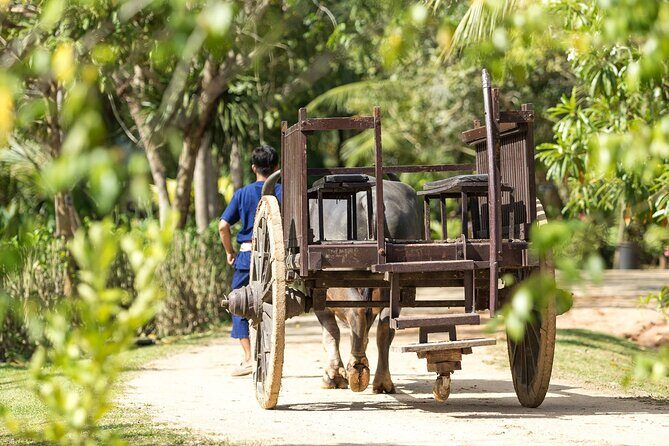
Your first stop is centered on buffaloes. You’ll learn their role in Thai agriculture and their historical significance, and you’ll see how they connect to everyday farm work. This is usually the part that makes people smile quickly, because buffaloes are instantly memorable.
Just be honest with yourself about animal interactions. One review mentioned buffaloes with nose piercing and that it made the person feel sorry for the animal. If you’re sensitive about animal treatment, you may want to go in with eyes open and be mindful in how you photograph or approach the animals.
Rubber tapping: tree-to-sheet, not just rubber in a factory
Next comes rubber trees and rubber tapping. You’ll watch or learn about the tapping process, then understand how that connects to rubber production from the tree to sheet. This is one of those segments that often surprises people, because rubber is everywhere in daily life, but most visitors never see where it comes from.
Rubber tapping also adds context for Phuket beyond beaches. Thailand’s island economy isn’t only tourism. Seeing how a plantation product is made helps you connect the dots when you later notice rubber-linked products around you.
Rice fields: planting and harvesting rhythms up close
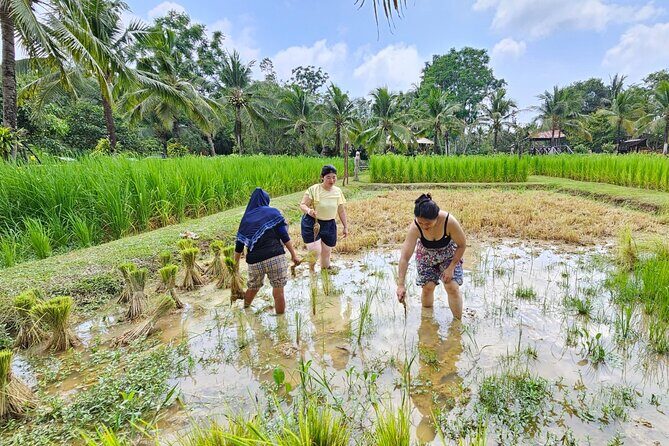
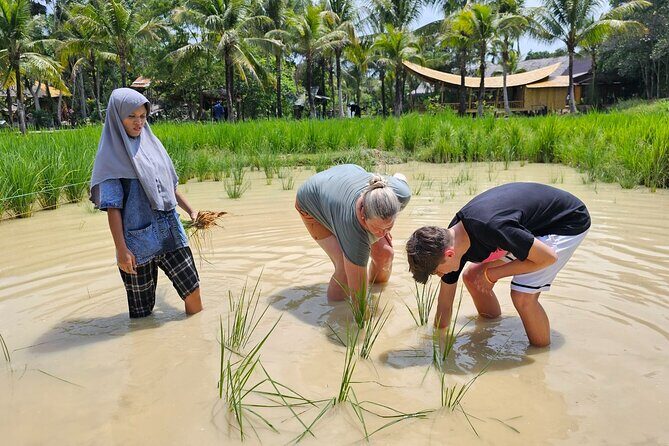
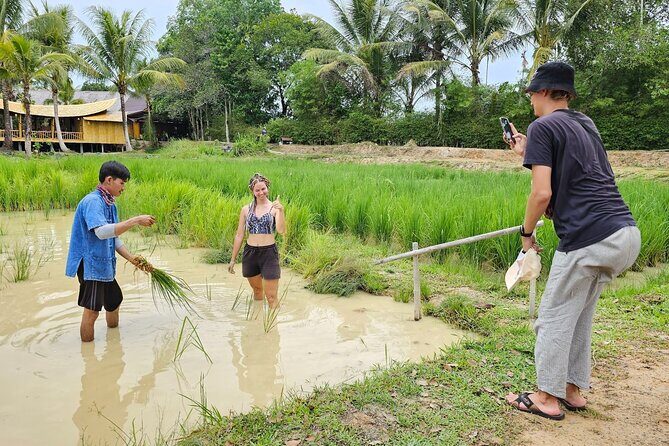
After rubber, the focus shifts to rice fields. You’ll see planting and harvesting up close, and you’ll learn about traditional techniques. Even though you’re there for only around two hours total, the rice portion tends to feel informative because it shows a cycle rather than a single moment.
This part works especially well if you’re the kind of traveler who likes practical knowledge. Rice is one of the world’s biggest staple crops, and understanding what “the work” looks like gives you a new lens for Thai food you’ll eat later.
You can also read our reviews of more tours and experiences in Phuket

Tin panning: a hands-on nod to Phuket’s mining past
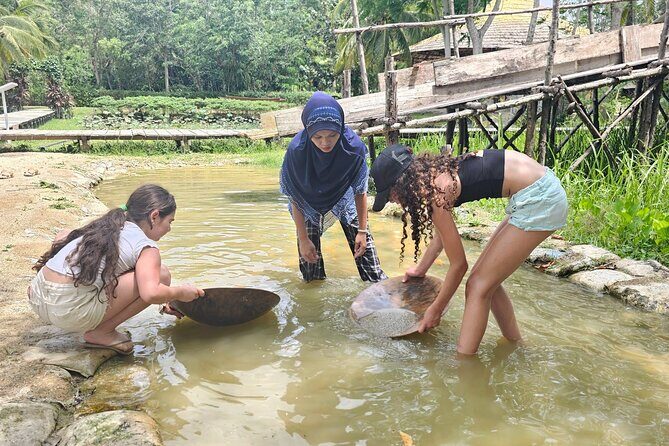
Finally, there’s tin panning. This is the playful segment that still fits the culture theme because it connects to Phuket’s tin mining legacy. You’re not just standing by; you get to try it, which makes it easy to remember.
Tin panning is also a nice contrast to the rest of the tour. You’re moving from farming to a mining-related activity, so the day doesn’t feel like one repeating scene. It gives your brain a new problem to focus on for a few minutes.
Pineapples, rice milling, and winnowing: farm work you can taste
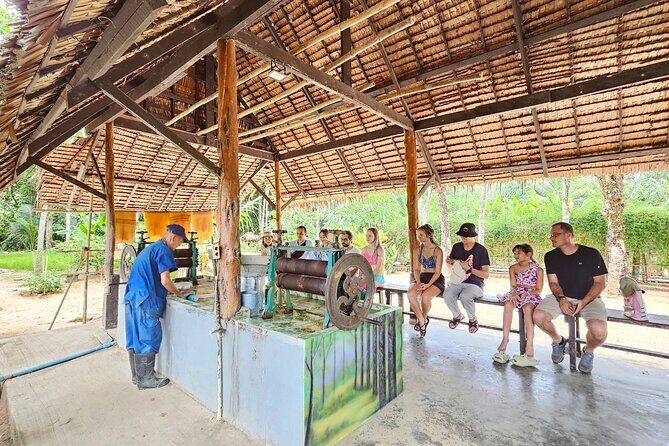
A huge reason this tour gets recommended is that it mixes farm production with food. You’ll taste pineapples, see traditional rice milling, and watch winnowing. That combination is smart because it answers a question most visitors don’t ask: what happens after you grow something?
Pineapple tasting: quick, local, and real
The pineapples are straight from the “freshly grown” story the tour presents. You’ll get to taste Phuket’s pineapples, which is a small moment, but it makes the farm theme feel immediate. Even if you don’t become a pineapple expert, you’ll at least connect the island’s produce to the land where it’s grown.
Traditional rice milling and winnowing
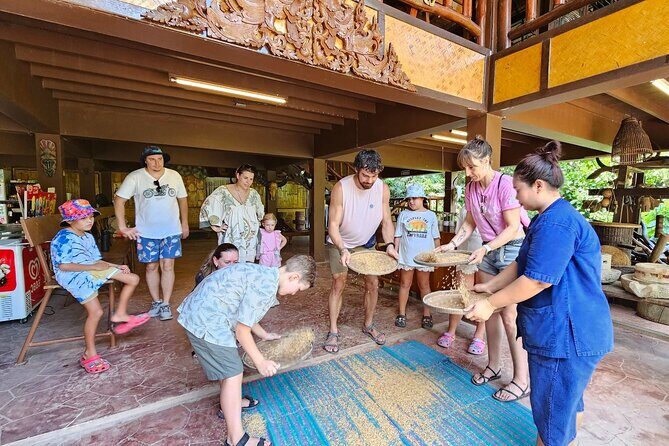
Watching traditional rice milling and winnowing adds depth to the rice field segment. Planting and harvesting show how rice starts. Milling and winnowing show how rice becomes something you can actually cook.
This matters because it turns farming from a concept into a process. You don’t just hear that rice is important; you see the steps that reduce it to usable grain. It’s the kind of “small details” understanding that makes a tour feel worth the time.
Thai house visit: coconut grating and curry paste-making
Later, you’ll spend time in a classic Thai house setting. This is where the tour shifts from field and plantation work to home life and food prep culture.
You’ll see coconut grating and curry paste-making. Even if you’ve cooked Thai food before, it helps to watch a process done in the local style. Curry paste, in particular, isn’t just a single ingredient—it’s a mix that depends on preparation. Seeing coconut grating also reminds you that many Thai flavors start with simple, labor-filled steps.
This segment is often a favorite for visitors because it feels personal. You’re moving from seeing production to seeing kitchen habits. It also helps kids, since curry paste-making is visually interesting and tends to feel “like a cooking class,” even if it’s shorter than a full workshop.
The guide experience: why people keep giving high marks

The reviews praise the guide as a major highlight, and the pattern makes sense. In a tour like this, the best guides translate farm work into human stories. They help you connect what you’re seeing with why it matters, without overcomplicating things.
While I don’t have a specific guide name to share from the information here, the tour’s communication is consistent: the operator team (signed Tawan in one message) comes across as responsive and friendly. That’s a small clue that they care about how the experience feels, not only what happens on paper.
If you’re going to book any “culture” tour, you want a guide who keeps the energy up and makes the activity understandable. This one seems to succeed at exactly that, especially for families who want it fun but also informative.
Price and value: is $38.88 fair for 2 hours?
At $38.88 per person for about 2 hours, you’re paying for a compact package of multiple learning stops plus a ticket that’s included. The value is strongest if you’re the type who wants variety in one outing: buffaloes, rubber tapping, rice field work, tin panning, pineapple tasting, and Thai house food prep all in a short window.
Where this price makes sense is the “activity density” idea. Many tours spend most of your time on transit or only show one main theme. Here, the tour stays in one place and rotates through several connected parts of farm and food life, which helps justify the cost for a half-day chunk.
Where to be a little careful: if you only care about one item, like animal photos or just cooking, you might feel like you’re sampling too many things quickly. The tour works best when you like a “see a lot, learn the connections” approach.
Who this tour suits best (and who should rethink it)
This experience is a good fit if you want a quick, hands-on taste of Thai countryside life without turning it into a half-week project. It’s especially appealing for:
- Families who want kids to participate, not just watch
- Couples who want a change from beach time
- Solo travelers who like structured activities and a small group vibe
- Groups who want something practical and culturally grounded
You should reconsider if:
- You’re very uncomfortable around farm animals (including the possibility of buffalo nose piercing)
- You prefer very quiet, contemplative tourism and don’t like a fast-moving schedule
- You’re sensitive to weather changes, since the experience requires good weather
Also note that the tour says most travelers can participate. That’s a useful clue that the activities are generally approachable, even if you’re not used to farm-style tasks.
Timing and weather: plan around Phuket conditions
This tour requires good weather. That matters because your time in the farm areas likely depends on outdoor conditions, and the schedule is short. If Phuket is wet or stormy during your travel days, you’ll want to keep this on a day when forecasts look stable.
The good news: the tour is only about two hours, so it doesn’t ruin your whole day if you need to adjust plans. It’s a manageable way to add local culture even when your schedule is tight.
Should you book Old Phuket Farm? My honest take
Book it if you want a compact, hands-on Phuket experience that teaches real farm and food processes. The highest praised parts are exactly what you’d hope for: people report a terrific guide, and they like that it’s both informative and fun. With a small group size and a variety of activities, it’s one of the more practical ways to understand how Thai island life ties to agriculture.
Skip it or go in with caution if animal welfare concerns would seriously affect your enjoyment, especially with the possibility of buffalo nose piercing. If that’s a deal-breaker for you, you’ll likely feel uneasy even if the tour is educational.
If you’re deciding between this and another activity, think like this: do you want to leave with a story about where rubber, rice, and tin come from, plus a kitchen skill you can picture later? If yes, this is a solid pick.
FAQ
How long is the Old Phuket Farm tour?
It lasts about 2 hours.
What’s included in the Old Phuket Farm ticket?
The admission ticket is included.
What’s the group size for this experience?
The tour has a maximum of 10 travelers.
Does the tour require good weather?
Yes. The experience requires good weather.
Is there a child ticket, and what ages qualify?
Child tickets are for ages 4 to 11.
What’s the cancellation policy?
You can cancel for a full refund up to 24 hours in advance. If you cancel less than 24 hours before the start time, the amount paid is not refunded. If the tour is canceled due to poor weather, you’ll be offered a different date or a full refund.
If you tell me your travel dates and whether you’re traveling with kids, I can suggest the best type of day to slot this into Phuket and how to pair it with nearby activities.
.jpg)