REVIEW · PHUKET
3 Fun Dives King Cruiser Wreck and Koh DokMai for Certified diver
Book on Viator →Operated by Phuket Dive Provider · Bookable on Viator
Three sites, one long day underwater. I love the King Cruiser wreck at 30 meters and the small groups of 3 to 4, which makes the whole day feel controlled instead of hectic. The main consideration: this is built for people with at least Advanced Open Water, and the schedule includes deeper time, so it’s not a casual outing for beginners.
On the practical side, I like that you get real comfort on the water: breakfast, lunch, snacks, soft drinks, plus round-trip transfers from many Phuket areas. You’ll also get clear limits on time and air—up to 50 minutes underwater or when your tank hits 50 bars—so your day stays organized and safety comes first.
In This Review
- Phuket 3-Stop Plan: King Cruiser Wreck, Shark Point, Koh Doc Mai
- Meeting at Chalong Pier and the Boat Day Rhythm
- King Cruiser Wreck at 30 Meters: Why This Stop Is the Headliner
- Shark Point Reef Time: Fish, Coral, and a Change of Pace
- Koh Doc Mai Caves: Serene Underwater Scenery for Advanced Certification
- How Long You’ll Be Underwater (and How the Air Limit Works)
- Gear, Insurance, and Transfers: Where Your $175.17 Gets Real Value
- The Instructor Team and What Their Style Signals About Safety
- Health Rules and Pre-Trip Timing You Need to Plan Around
- Who Should Book This Phuket Day (and Who Should Skip It)
- Should You Book the King Cruiser Wreck + Koh Doc Mai Day?
- FAQ
- Is the tour suitable for people with an Advanced Open Water certification?
- What underwater sites are included?
- How long is each underwater session?
- Is scuba gear included?
- Are transfers included from Phuket hotels?
- What meals are provided on the day?
- Do I need to bring a computer for tracking depth and time?
- What happens if weather is bad?
Phuket 3-Stop Plan: King Cruiser Wreck, Shark Point, Koh Doc Mai
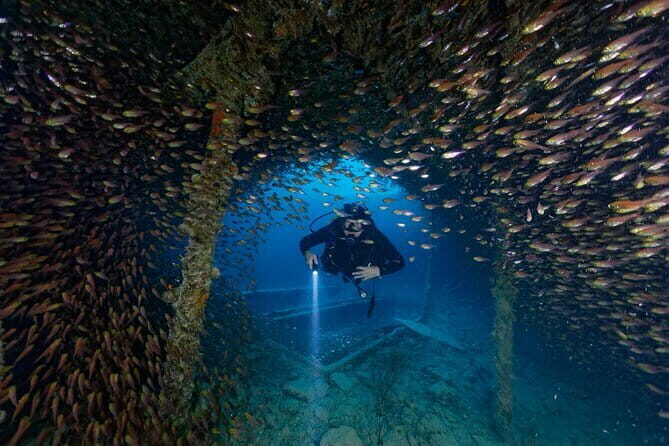
This is a full-day Phuket package that strings together three underwater locations in one outing, with expert site choice based on weather. The goal is simple: start with a major wreck experience, then shift to reef action, and finish at Koh Doc Mai, where the underwater scenery tends to feel calmer and more intimate.
What makes this plan smart is the pacing. Three separate underwater sessions means you can experience very different habitats without rushing one area to death. And because the group per session is small (three to four people), you’re less likely to feel like a number on a cattle-boat.
Meeting at Chalong Pier and the Boat Day Rhythm
You meet at Chalong Pier (12 Sunrise Rd, Tambon Chalong). The meeting window starts at 7:00 AM, and the first leg of the day runs out from the harbor around 7:45 AM. You’re back by about 5:00 PM, so this is a “plan the whole day” commitment.
The format tends to work well because it’s structured. You’ll have time on the boat for breakfast and setup, then you rotate through the three sites with breaks in between for food and rest. The operator keeps the passenger count limited—maximum 15 travelers overall—so the boat doesn’t feel packed.
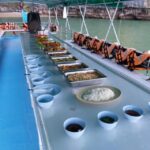
Also, the food part is not an afterthought. Breakfast and lunch are served on the boat, with snacks and refreshments between sessions. If you have dietary needs (vegetarian, vegan, gluten-free, and more), the operator says they can accommodate when you list it at booking.
You can also read our reviews of more tours and experiences in Phuket.


King Cruiser Wreck at 30 Meters: Why This Stop Is the Headliner
The King Cruiser Wreck is the reason many people choose this itinerary. You’ll spend the day’s first underwater session exploring at about 30 meters with an experienced instructor.
Why this matters for you:
- Wreck diving is all about structure. You’re not just looking at fish; you’re studying a man-made underwater “map.” That tends to make the experience feel more like exploration than sightseeing.
- Depth adds responsibility. At around 30 meters, you’ll want steady buoyancy and calm timing. That lines up with the Advanced Open Water requirement for safety.
- You also get the benefit of going early. Morning conditions often help with visibility, and you start the day with energy instead of late-day fatigue.
A practical tip: if you’re new to the deeper end of your certification range, keep your expectations realistic. Focus on breathing steady, controlling buoyancy, and staying close to your instructor’s plan rather than chasing every object on your own.
Shark Point Reef Time: Fish, Coral, and a Change of Pace
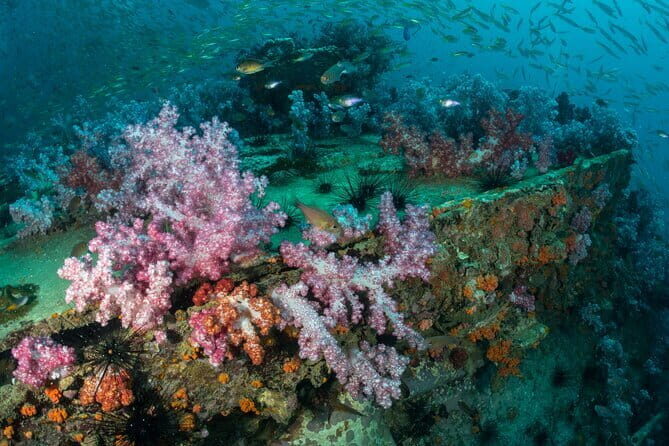
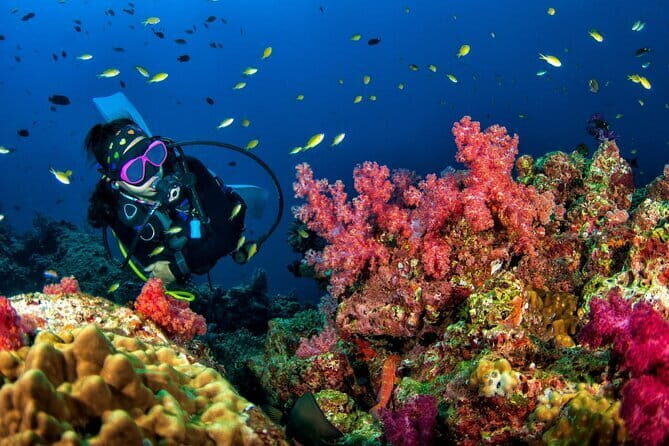
After the wreck, the itinerary moves to Shark Point. The operator selects this site based on weather, but the intent is consistent: a reef experience with lots going on underwater.
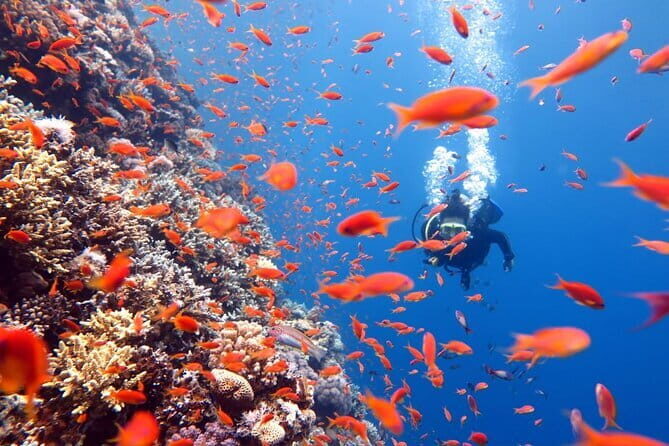
This stop is where your day shifts from wreck structure to living coral and fish life. In the feedback you can see a theme: people single out Shark Point as a favorite for marine activity. One diver named Sam as an instructor and credited the experience to strong guidance and professionalism, while another highlighted that Shark Point was packed with marine life.
What you should know before you go:
- Reef conditions can change. Visibility and currents can vary day to day, even with good planning.
- Reef time can feel more “active” than a wreck. You’ll likely spend more attention on buoyancy and line awareness because reef areas can hide coral heads and make accidental contact more likely.
If you like motion and variety—swimming through patches of fish and coral instead of moving along a wreck—this part is likely to satisfy you.
Koh Doc Mai Caves: Serene Underwater Scenery for Advanced Certification

The last stop is Koh Doc Mai, and it’s known for cave-style underwater scenery. The route and exact experience depend on conditions, but the key idea stays the same: you’re ending the day in a more atmospheric setting than Shark Point.
In the feedback, people describe the Koh Doc Mai caves as magical and serene. Natalie (named in one review) was praised for being patient, kind, and knowledgeable, which matters here. Cave and confined underwater environments demand careful procedure and communication.
For you, the biggest takeaway is mental readiness. Even if you’re not planning anything technical, caves often mean more awareness:
- keep a tight buddy/instructor distance
- follow the route and turnaround plan closely
- avoid rushing just because it feels calm
This is also why Advanced Open Water makes sense. You’ll need the skills and confidence to manage breathing, buoyancy, and navigation in an environment that asks for more discipline than an open reef.
How Long You’ll Be Underwater (and How the Air Limit Works)
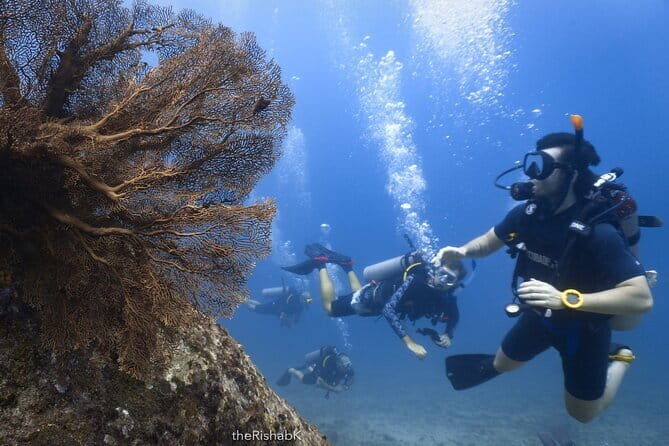
Each underwater session is designed to give you up to 50 minutes underwater, or until your cylinder pressure reaches 50 bars. In other words, it’s not just a calendar time limit—it’s an air-management limit too.
That usually benefits you in two ways:
- It reduces the pressure to “finish” a route before your air is gone.
- It helps your instructor plan the depth, timing, and exit while everyone stays in safe operating space.
It also explains why the day can feel full but not chaotic. Between sessions, you’ll have breaks for food and recovery, and then you’ll rotate back into another planned underwater window.
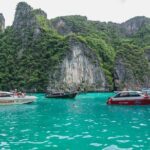




Gear, Insurance, and Transfers: Where Your $175.17 Gets Real Value
At $175.17 per person, the price looks reasonable once you break down what’s included. You’re not just buying boat transport. The package includes:
- full scuba gear
- three underwater sessions at King Cruiser Wreck, Shark Point, and Koh Doc Mai
- scuba insurance coverage
- breakfast, lunch, snacks, soft drinks on the boat
- complimentary round-trip transfers from Kamala, Patong, Karon, Kata, Rawai, Nai Harn, and Chalong
That last part can be a big deal. If you’re staying in one of those areas, you save time and hassle, and you avoid trying to coordinate taxis early in the morning. If you’re outside the transfer zone, the operator says pickup isn’t included, though private transfers are available for an extra cost.
A couple of items that are not included:
- a computer for depth/time tracking (so you’ll need to bring your own if you use one)
- optional underwater photo/video services
- alcoholic beverages
One small comfort point: the team is described as patient and adaptable in the feedback, and people highlight guides who followed closely from start to finish. That’s a sign the operator is trying to manage the day rather than just “get people in the water.”
The Instructor Team and What Their Style Signals About Safety
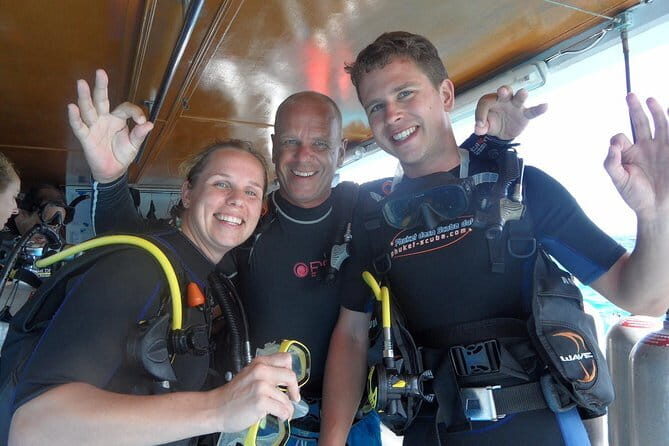
Across the feedback, certain names come up repeatedly: Sam, Natalie, Kob, Eak, and Max. The consistent message isn’t just that the guides were friendly—it’s that they were professional, patient, and focused on safety.
Why that matters for you:
- In small groups (three to four), an instructor’s style shapes your comfort level. If they run good briefings and keep you organized, you’ll spend less energy worrying and more energy enjoying.
- People also mention the operation running smoothly. One review even described the process as smooth and structured, like a well-drilled routine. That’s the kind of operation you want when you’re working at depth.
I’d take those hints seriously. For an advanced-focused itinerary with deeper time and cave scenery, the difference between a good guide and a so-so one is huge.
Health Rules and Pre-Trip Timing You Need to Plan Around
The operator lists several conditions and reminders that affect whether you should participate. If any of these apply to you, you should check carefully with a medical professional and disclose everything to the team:
- asthma or wheezing, chronic bronchitis or persistent chest complaints
- chronic sinus conditions
- chest surgery
- recurrent ear problems, chronic ear discharge/infection, or perforated eardrum
- breathlessness
- epilepsy
- diabetes mellitus
- tuberculosis or other long-term lung disease
- brain, spinal cord, or nervous disorders
- heart disease
- high blood pressure
- collapsed lung (pneumothorax)
They also ask about timing:
- if you’ve had alcohol within the last eight hours, you should not go
- you should avoid flying for at least 18 hours after your last underwater session when doing multiple sessions (where possible, waiting 24 hours is recommended)
If you want the day to go smoothly, treat these rules as part of the plan, not as paperwork.
Who Should Book This Phuket Day (and Who Should Skip It)
This outing is best for you if:
- you hold at least Advanced Open Water
- you want one organized day that covers a wreck, reef, and cave-style scenery
- you like small groups (three to four per session) and a structured schedule
- you value transfers, meals, gear, and insurance being handled
You might want to skip it if:
- you’re working toward your first comfort with deeper conditions
- you’re sensitive to crowded schedules (while the boat has a cap, this is still a full-day group format)
- you have medical issues listed by the operator that may affect safe participation
Also, be ready for the early start. If you hate waking up before the sun, plan accordingly.
Should You Book the King Cruiser Wreck + Koh Doc Mai Day?
I think this is a strong booking when your goal is variety in one day and you’re already qualified for the depth and complexity. The value equation is solid because the price includes gear, insurance, three underwater sessions, meals, and transfers from multiple Phuket neighborhoods. And the repeated praise for instructors like Sam, Natalie, Kob, Eak, and Max points to a safety-first, calm delivery style.
Don’t book it just because it’s a wreck name. Book it because you want a well-run advanced itinerary: structured timing, small groups, and a final stop at Koh Doc Mai that rewards careful technique rather than speed.
FAQ
Is the tour suitable for people with an Advanced Open Water certification?
The program is designed for experienced scuba participants with a minimum Advanced Open Water certification.
What underwater sites are included?
Three underwater sessions are included: King Cruiser Wreck, Shark Point, and Koh Doc Mai.
How long is each underwater session?
Each session offers up to 50 minutes underwater, or until your cylinder pressure reaches 50 bars.
Is scuba gear included?
Yes. The full set of scuba diving equipment (scuba gear) is included.
Are transfers included from Phuket hotels?
Complimentary round-trip transfers are included from Kamala, Patong, Karon, Kata, Rawai, Nai Harn, and Chalong. Pickup outside this zone is not included (private transfers may be available for a fee).
What meals are provided on the day?
Breakfast, lunch, snacks, and refreshments are served on the boat, and soft drinks are included. Dietary restrictions can be accommodated if you indicate them when booking.
Do I need to bring a computer for tracking depth and time?
A dive computer is not included, so if you use one, you should bring your own.
What happens if weather is bad?
The experience requires good weather. If it’s canceled due to poor weather, you’ll be offered a different date or a full refund.