Elephants, handled gently and on foot. At Bukit Elephant Park in Phuket, this 90-minute mini program helps you watch elephants make natural choices, then feed them from a safe, fenced area. I love the ethical sanctuary rules that mean no riding or bathing, and I also like that the schedule blends Thai culture, including rubber tapping, coconut milk making, and a Thai food cooking session. The main drawback is timing: pickup can run later than you’d hope, so build in a little buffer.
This isn’t a huge show. The group is capped at 30, and you’ll get an English and Thai guide plus mahouts who explain what’s happening as you go.
Rules matter here. You won’t have drones or flash photography, and the staff keep the interaction calm, with elephants allowed to walk freely in the park at their own pace.
In This Review
- Key things to know before you go
- Mini Elephant Nature at Bukit Elephant Park: what this is really like
- The 90-minute flow: how your time usually gets used
- Elephant time without the stress: watching, feeding, and staying respectful
- Feeding through the fence: the photo moment that feels more “real”
- Thai culture activities: why this elephant tour is more than a photo stop
- Safety, comfort, and the on-the-ground rules that matter
- Price and value: is $45.62 worth it?
- Who this tour suits best (and who might want to skip it)
- Getting the schedule right: time slots and pickup reality
- Quick planning checklist (so your visit goes smoothly)
- Should you book Mini Elephant Nature at Bukit Elephant Park?
- FAQ
- Is elephant riding included?
- Is bathing with elephants included?
- How close can you get to the elephants?
- Can you feed the elephants?
- What Thai culture activities are included?
- What is included in the tour price?
- Is pickup included, and are there transfer fees?
- Are drones or flash photos allowed?
- What should I do in rainy weather?
- Can I cancel for free?
Key things to know before you go
- No riding, no bathing: you observe and interact in safer, lower-stress ways
- Feeding with a fence: you feed from a designated safe area while staff oversee it
- Thai culture added on purpose: rubber tapping, coconut milk making, and cooking are part of the flow
- Small group size: a maximum of 30 keeps the pace manageable
- Calm behavior rules: no loud noises in the park, plus clear photo limits
- Rain-ready basics: umbrellas and boots are provided during rainy season
Mini Elephant Nature at Bukit Elephant Park: what this is really like
If you want elephants, but you do not want the chaotic circus version, this is a strong option. Bukit Elephant Park runs a mini guided program focused on safety and animal welfare, and it purposely removes the stuff that creates stress for elephants, like riding and bathing.
At a high level, you’re there to do three things: see elephants in a sanctuary setting, feed them at a controlled spot, and learn Thai cultural skills. That combination is the main reason I think this experience feels more meaningful than an elephant-only stop.
The elephant part is built around distance and calm. You observe natural behavior with guidance from the guide and mahouts, then move to a fenced feeding area where staff keep everything orderly.
You can also read our reviews of more tours and experiences in Phuket.


The 90-minute flow: how your time usually gets used
The program runs about 1 hour 30 minutes, and it fits cleanly into a half-day in Phuket. You’ll pick one of the available time windows: 09:00–11:00, 11:00–13:00, or 14:00–16:00.
Because the tour is short, the pace stays purposeful. You are not wandering around for hours with nothing to do. Instead, you get a structured sequence: safety talk and expectations, elephant observation, a feeding moment, then Thai culture activities that turn the visit into something you carry home with you.
Here’s what that usually feels like in practice:
You start with a welcoming drink (coffee and/or tea) and a bottle of water per person. Then the guide sets the rules of the park. Think quiet voices, respectful behavior, and follow-these-instructions energy, because the whole setup depends on it.
Next comes the elephants. You’ll learn about their history and habits, but the key is that you’re watching from a respectful place rather than charging in.
Then you’ll do feeding at the safe area. You’re not free-feeding from anywhere. You feed correctly through the protected feeding setup while mahouts and staff stay close.
The last stretch is the Thai culture portion, which includes a rubber tapping and rubber sheet making demonstration plus activities like making coconut milk and joining a Thai food cooking session. Even in a short visit, it helps you feel like you understood something real about Thailand, not just snapped photos.
Elephant time without the stress: watching, feeding, and staying respectful
This is the part many people come for, so it’s worth talking about what the rules actually mean for you. The park does not offer riding or bathing activities. That matters because it keeps the experience on the right side of animal welfare and also shapes what you can expect during the interaction.
You will observe elephant behavior from a distance under guide and mahout instructions. The purpose is safety and low disruption. The elephants are allowed to walk freely in the park, so you’re not herding them into an unnatural routine.
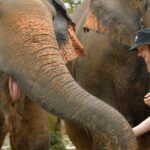
Feeding is your closest hands-on moment, and it’s still controlled. You feed at safe feeding areas with a fence between elephants and visitors, and the guides, mahouts, and staff are right there to help you feed correctly.
That fence setup is not just there to protect the elephants. It protects you too. It reduces sudden movements and keeps the interaction calm. It also makes the whole thing more predictable, which is great if you’re visiting with kids or you simply want your photos without chaos.
The park also has clear conduct rules: no physical or verbal violence toward elephants is allowed, and the environment stays quiet. No loud noises. No drones. No flash photography. If you’re the type who loves wildlife, you’ll appreciate that you’re asked to behave like a guest in their home, not like a spectator at a show.
Feeding through the fence: the photo moment that feels more “real”
If your idea of an elephant experience includes getting close, this is as close as it responsibly gets here. The feeding area is set up so you can participate while the elephants remain in a protected zone.
You’ll likely get memorable photos here because the scene is natural and the elephants’ expressions are easier to capture when they are calm. One of the strongest themes in the experience is that elephants appear well cared for, and that the staff do the monitoring that keeps everyone safe.
Practical tip: treat the feeding instructions like the main event. If you rush or ignore directions, it slows things down for everyone. When you follow the guide closely, the feeding moment becomes smoother and you usually get better photo angles because the setup stays stable.
Also, the mood is intentionally quiet. That means your best shots are often the ones you take without yelling over the guide, and without trying to force the elephants to do something.
In short: you might not get the wild, close-contact gimmicks some elephant attractions market, but you do get an experience that feels grounded.
Thai culture activities: why this elephant tour is more than a photo stop
Here’s the smart part: elephants are the anchor, but Thai culture is the real “bonus skill” you leave with.
During the tour, you’ll learn about traditional Thai practices through hands-on or guided activities such as:
- Rubber tapping and a rubber sheet making demonstration
- Making coconut milk
- A Thai food cooking session
Rubber tapping matters because it’s a real Thai livelihood tied to the natural world. Even if you’ve never thought about how rubber is produced, this kind of demonstration gives you a new lens for something you’ll likely see around Thailand.
The coconut milk and cooking elements help you translate Thailand beyond food as a restaurant concept. You get to see the steps and then taste what you make or learn. In a short 90-minute program, you’re not becoming a chef, but you’re gaining a practical understanding of how Thai flavors come together.
This is why I like this tour for first-timers. You’re doing one iconic animal experience, and you’re also getting a small, authentic cultural lesson that doesn’t require a full day tour.






Safety, comfort, and the on-the-ground rules that matter
The park emphasizes safety and sanitization. That’s not just marketing language; it shows up in the way the tour is run.
A few key rules shape your experience:
- You keep to the designated paths and feeding areas
- You follow instructions from the guide and mahouts closely
- No loud noises in the park
- No drones and no flash photography
Also, the experience provides practical weather support. If you’re visiting during rainy season, boots and umbrellas are included.
That sounds like a small detail, but on Phuket it can make the difference between enjoying the tour and spending half of it trying to figure out footwear in the mud.
The group size stays reasonable with a max of 30, which also helps the staff manage everyone. You get attention, not a stampede.
If you’re traveling with a toddler, this type of structure is helpful. The visit is short, and the focused stops make it easier to keep little ones from getting restless. (The park also notes that parents must have baby holders during the tour.)
Price and value: is $45.62 worth it?
At $45.62 per person, this tour sits in the “affordable day activity” range rather than the luxury bucket. The value comes from what’s included and what’s deliberately excluded.
Included in the price:
- A welcoming coffee and/or tea plus one bottled water per person
- An air-conditioned vehicle
- Umbrellas and boots during rainy season
- English and Thai guide
Not included:
- Tips
- An extra transfer charge (250 THB/adult and 150 THB/child) from certain areas like Mai khao, Naiyang, Naiton, and Layan Beach
So your real cost depends on where you start. If you’re staying in one of those areas, factor in the transfer fee so the total doesn’t surprise you.
What you’re really paying for is the ethical format and the guidance. You’re not paying for elephant rides or bathing. You’re paying for a structured, supervised wildlife experience that keeps elephants calm and keeps visitors safe.
One more thing: with group discounts available and a max group size of 30, it can feel like a “small, guided class” rather than a crowded attraction—especially compared with bigger elephant operations.
Who this tour suits best (and who might want to skip it)
This is a great fit if you want an elephant experience that leans ethical and calm. The no-riding and no-bathing rule will appeal to people who care about welfare and want the interaction to be lower stress for the animals.
It’s also a strong choice if you like culture on the same day. The rubber tapping demo and coconut milk/cooking activities give you something to learn, not just something to watch.
This might not be for you if your main goal is maximum contact. Because the elephants are observed from a distance and feeding is done through a fenced area, you should expect limits. You may get chances for closer moments like gentle patting or more personal photo time depending on how the staff manage the feeding setup, but it’s not designed as a free-for-all.
It’s also wise if you are very time-sensitive. One practical consideration is that pickup can arrive late. If you are juggling other plans, pick a time slot with buffer, and do not schedule a tight appointment right after.
Getting the schedule right: time slots and pickup reality
You choose one of three windows: 09:00–11:00, 11:00–13:00, or 14:00–16:00. The tour itself is about 1.5 hours.
Pickup is offered, but it can be inconsistent in timing. I recommend you plan as if pickup might not be perfectly early. Show up ready, and keep your next plan flexible if you can.
If you’re outside common pickup zones, confirm whether the extra transfer fee applies. From Mai khao, Naiyang, Naiton, and Layan Beach, there’s an additional charge of 250 THB for adults and 150 THB for children.
Also keep an eye on behavior rules when you arrive. No flash photography, no drones, no loud voices. It’s easier to remember when you think of it like a sanctuary visit, not a “tourist stop.”
Quick planning checklist (so your visit goes smoothly)
- Wear closed-toe shoes. In rainy season, boots are provided, but regular footwear helps.
- Bring patience. The elephants set the pace, and the staff prioritize calm behavior.
- Keep your phone settings ready for low-light without flash.
- If you’re with kids, use the baby holder requirement as your baseline plan.
- Arrive with buffer time due to possible pickup delays.
If you do these basics, you’ll spend your energy on the experience instead of logistics.
Should you book Mini Elephant Nature at Bukit Elephant Park?
I’d book this if you want a well-run, sanctuary-style elephant encounter that includes real Thai culture. The biggest wins are the welfare-minded rules (no riding or bathing), the calm way elephants are handled, and the fact that the tour teaches you rubber tapping and Thai food/coconut milk steps instead of stopping at simple viewing.
Skip it if you specifically want intense close contact or if you cannot handle a potentially late pickup. For everyone else, it’s a solid value at $45.62, especially once you consider what’s included and the respectful format.
If your priority is ethical interaction plus a culture add-on in a compact 1.5-hour visit, this one belongs on your Phuket shortlist.
FAQ
Is elephant riding included?
No. Elephant riding is not offered as part of this program.
Is bathing with elephants included?
No. Elephant bathing activities are not offered here.
How close can you get to the elephants?
You’ll observe elephants from a distance under guide and mahout instructions. Feeding happens at safe feeding areas with a fence between elephants and visitors.
Can you feed the elephants?
Yes. You can feed elephants at the designated safe feeding area, and staff are there to help you feed correctly and safely.
What Thai culture activities are included?
The tour includes learning about Thai culture through activities such as rubber tapping, coconut milk making, and a Thai food cooking session. There is also a rubber sheet making demonstration.
What is included in the tour price?
The price includes welcoming drinks (coffee and/or tea), one bottled water per person, an air-conditioned vehicle, umbrellas and boots during rainy season, and an English and Thai guide.
Is pickup included, and are there transfer fees?
Pickup is offered. An extra transfer charge applies for certain areas such as Mai khao, Naiyang, Naiton, and Layan Beach (250 THB per adult and 150 THB per child).
Are drones or flash photos allowed?
No. Drones are not allowed, and flash photography is not allowed.
What should I do in rainy weather?
The tour provides umbrellas and boots during rainy season, so you’ll be covered for the wet conditions.
Can I cancel for free?
Yes. You can cancel for a full refund up to 24 hours before the experience starts. If you cancel less than 24 hours before, the amount paid is not refunded.